Professional Mold Inspection & Moisture Investigation Services
California Building Environment provides independent mold inspections, moisture investigations, indoor air quality evaluations, and professional sample collection throughout Southern California.
When sampling is appropriate, air samples (spore traps) and surface samples (tape lifts, swabs, bulk) are collected and submitted to AIHA-LAP, LLC accredited laboratories for fungal analysis. We do not perform laboratory testing ourselves, and we do not perform mold remediation, ensuring our findings remain objective.
Independent Mold Assessments for Residential and Commercial Properties
Our inspections begin with a detailed visual evaluation of the property. We look for visible microbial growth, signs of past or current water intrusion, staining, elevated moisture conditions, and other indicators that may warrant further investigation.
When appropriate, moisture readings (penetrating and non-penetrating meters), infrared thermography, air samples (spore traps), surface samples (tape lifts, swabs, bulk), and inner-wall cavity samples may be collected. Samples are submitted to AIHA-LAP, LLC accredited laboratories for direct microscopic examination (spore identification and quantification). Laboratory findings are incorporated into a detailed inspection report with moisture source identification, extent of affected areas, and remediation protocol recommendations per IICRC S520.
Because we do not perform mold remediation, our inspection findings are independent and focused solely on documenting existing conditions.
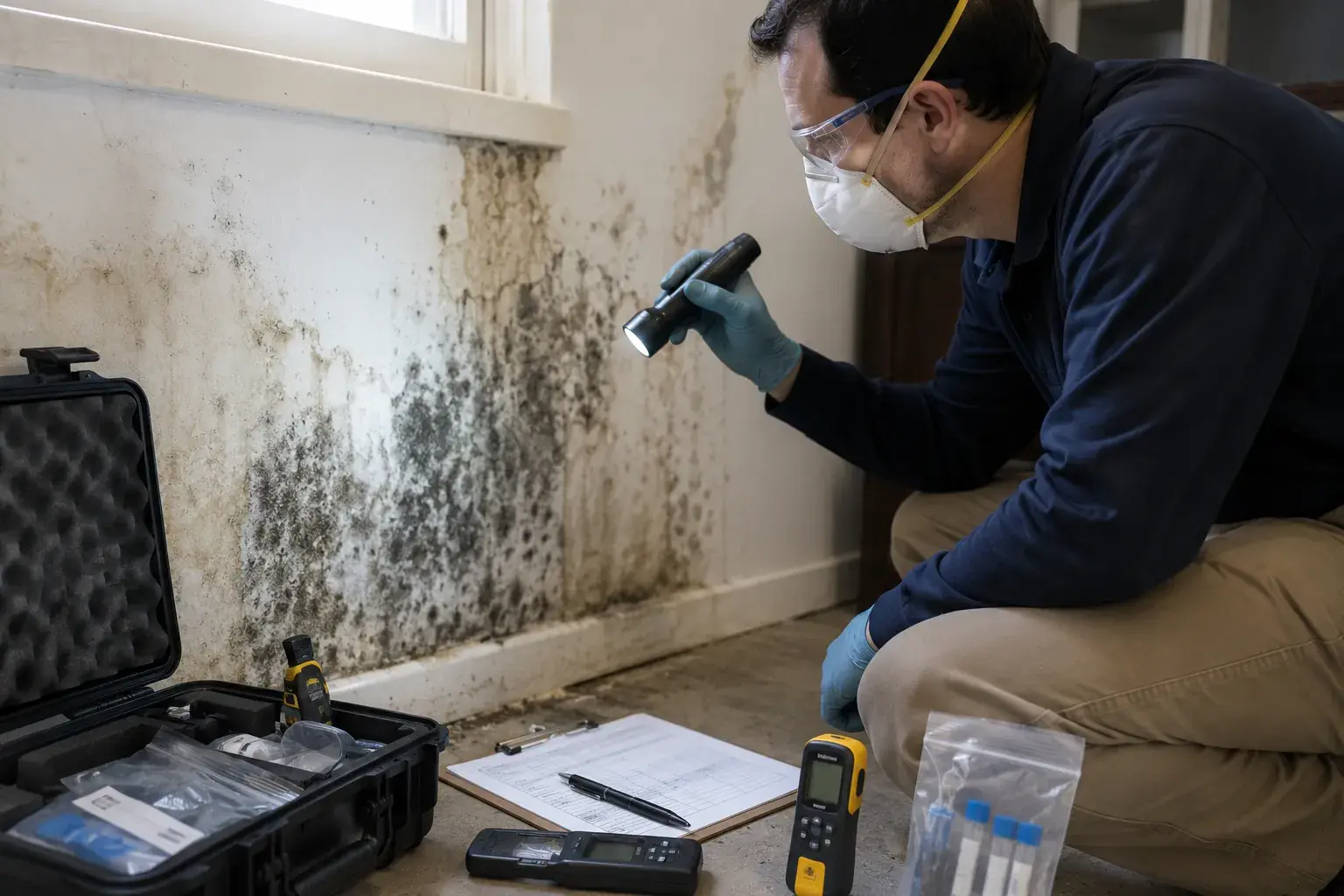
Common Situations That May Warrant a Mold Inspection
Mold inspections are recommended following water intrusion events, when visible microbial growth is observed, when persistent musty odors suggest hidden moisture, during real estate due diligence, when occupants report IAQ-related health symptoms, and for post-remediation verification per IICRC S520.
Water Intrusion Events
Plumbing leaks, roof failures, window/door flashing defects, foundation seepage, and flooding create the sustained moisture conditions required for microbial amplification. Inspections identify affected materials and moisture sources.
Visible Microbial Growth
Discoloration on drywall, wood, insulation, HVAC components, or contents may indicate active or past fungal growth. Inspection determines extent, species (via sampling), and moisture drivers.
Musty Odors
Persistent earthy/musty odors often indicate hidden microbial growth in wall cavities, crawlspaces, attics, or behind cabinetry where visual inspection alone is insufficient.
Real Estate Due Diligence
Buyers, sellers, and lenders request mold inspections during transactions to identify undisclosed water damage, prior remediation, or conditions conducive to future microbial growth.
Occupant Health Concerns
When building occupants report respiratory irritation, allergic responses, or other symptoms temporally linked to the indoor environment, an inspection evaluates whether microbial conditions may be contributing.
Post-Remediation Verification
Independent clearance inspections verify that remediation per IICRC S520 achieved acceptable conditions: source corrected, affected materials removed/cleaned, and airborne spore levels consistent with outdoor comparisons.
Professional Mold Inspection Process
Visual Inspection
A comprehensive visual inspection is performed to identify visible mold growth, moisture damage, staining, and other conditions that may require further evaluation.
Moisture Assessment
Moisture meters and other inspection methods may be used to identify elevated moisture levels and potential sources of water intrusion.
Sample Collection
When appropriate, air samples, surface samples, or bulk samples are collected using industry-accepted procedures and submitted to accredited laboratories.
Laboratory Report
Laboratory findings are incorporated into a comprehensive inspection report documenting observations, sample locations, and analytical results.
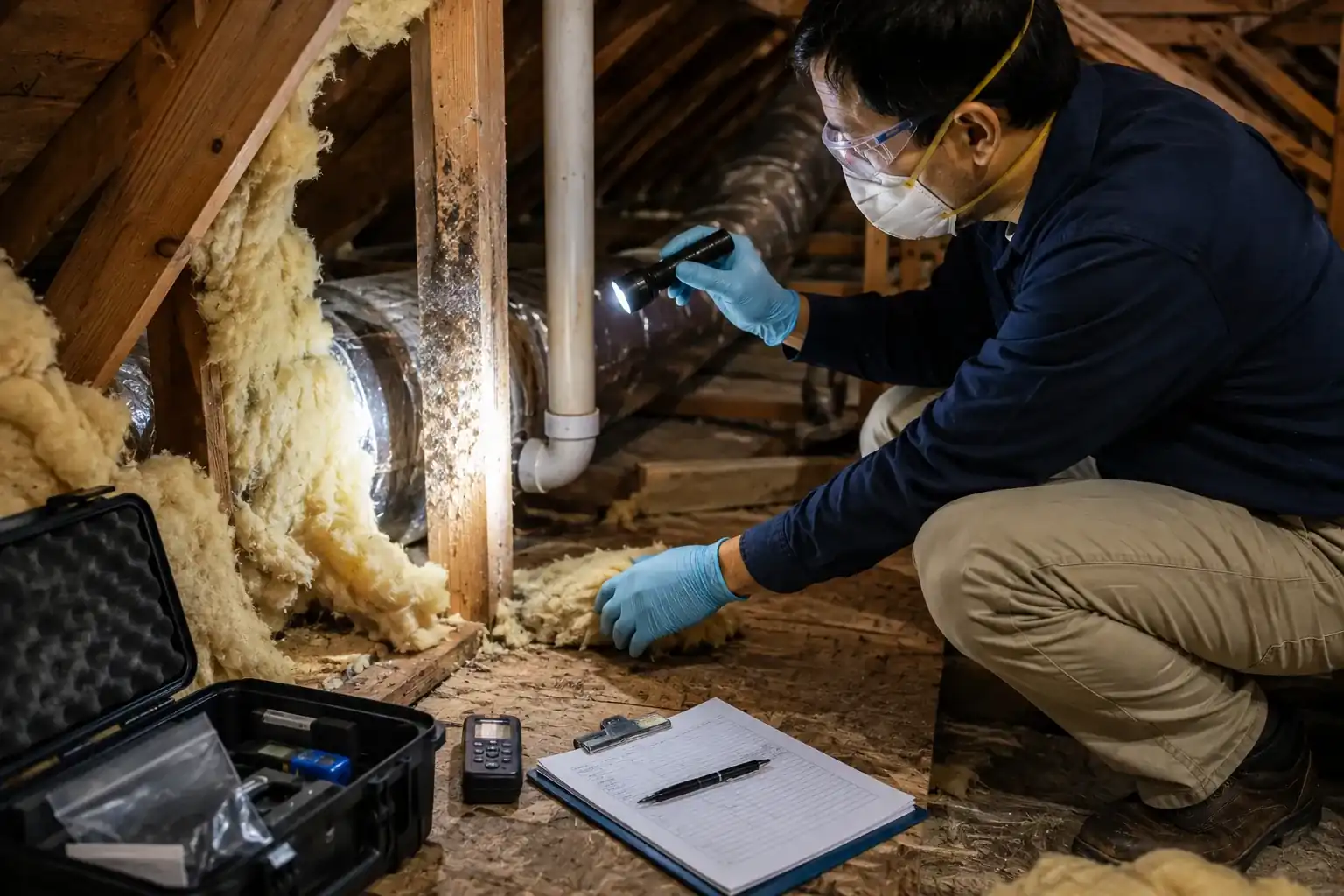
What We Evaluate During a Mold Inspection
Every inspection is tailored to the property and project objectives. Areas commonly evaluated include:
- Visible mold growth
- Water intrusion
- Roof leaks
- Plumbing leaks
- Moisture intrusion around windows and doors
- Wall cavities (when accessible)
- Ceilings and insulation
- Crawl spaces
- Attics
- HVAC systems
- Indoor air quality conditions
- Relative humidity
- Building materials affected by moisture
- Areas identified by the client during the inspection
Mold Inspection FAQs
Do you perform laboratory mold testing?
No. We perform the inspection and collect air, surface, or bulk samples when appropriate. Those samples are submitted to accredited laboratories for analysis. Laboratory analysis is performed by the accredited laboratory—not by California Building Environment.
Do you perform mold remediation?
No. We are an independent environmental inspection and consulting company. We do not provide mold remediation or restoration services, allowing us to provide objective inspection findings.
Will every inspection require sampling?
Not necessarily. The need for sampling depends on the conditions observed during the inspection and the goals of the project. In some cases, a visual inspection and moisture assessment may provide sufficient information, while other situations may warrant laboratory analysis.
How long does a mold inspection take?
Inspection times vary depending on the size of the property, accessibility, and the scope of the investigation. Most residential inspections take 2-4 hours on site, while larger commercial or industrial properties may require additional time.
When will laboratory results be available?
Turnaround times depend on the accredited laboratory and the selected analysis schedule. Laboratory findings are included with the final inspection report once analysis has been completed.
Standards & Guidance
Because no federal regulation sets mold inspection requirements, our inspections follow the recognized guidance documents and industry practices below:
- EPA Mold Guidance — The EPA provides guidance on mold assessment and remediation for residential and commercial properties.
- Cal/OSHA — California Occupational Safety and Health Administration requires employers to address mold hazards in the workplace.
- CDPH Mold Guidance — California Department of Public Health provides guidance on mold exposure and health effects.
Inspections are documented with photo-annotated reports, and any samples collected are analyzed by accredited laboratories using EPA-recognized analytical methods.
Do I Need a Mold Inspection?
Check any situation that applies to your property:
If you checked one or more, schedule an inspection.
Request an InspectionRequest a Quote
What Happens During a Mold Inspection
Visual Assessment
Our inspector examines all areas for visible mold, moisture damage, and conditions that support mold growth.
Moisture Investigation
We identify moisture sources using professional moisture meters and thermal imaging to find hidden water intrusion.
Sample Collection
Air samples and surface samples are collected from suspect areas and submitted to accredited laboratories.
Detailed Report
You receive a comprehensive report with lab results, findings, and recommendations for addressing any issues found.
Schedule an Independent Mold Inspection
Whether you're dealing with water damage, visible mold, indoor air quality concerns, or simply want peace of mind, California Building Environment provides independent inspections and professional sample collection throughout Southern California.